Is a COBOL codebase worth anything to AI companies?
AI companies license private code to train coding models, and COBOL is hard for them to find. See who pays for a COBOL codebase and what rules one out.
Last checked November 20, 2026
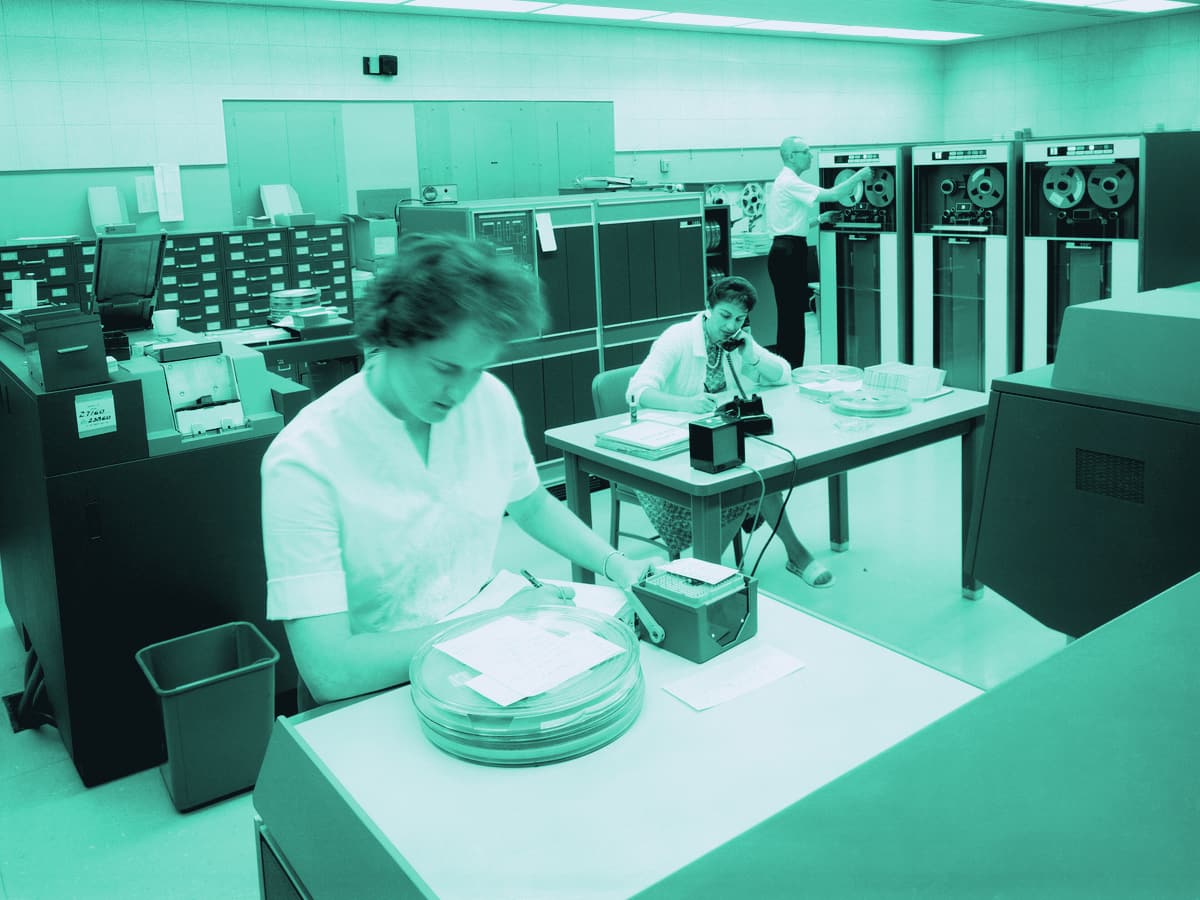
Yes, if the code is private and you hold the rights to it. AI companies license private code to train their coding models, and IBM’s researchers, who built a model that turns COBOL into Java, wrote in 2025 that “the existing pool of COBOL data is finite”. Patronus AI asks about COBOL by name, and Mercor Data counts it among the languages that raise a software company’s amount. A license hands over a copy, so the system you run stays yours.
This is general information, not legal advice. The code fit check shows which AI companies take code like yours.
COBOL still runs banks and government systems
Anthropic’s February 23, 2026 post on COBOL modernization says COBOL “handles an estimated 95% of ATM transactions in the US”. The Social Security Administration’s inspector general told Congress in September 2018 that the agency “maintains more than 60 million lines of COBOL”.
In 2019 the GAO picked the 10 most critical legacy systems in the federal government, aged 8 to 51 years. One of them, at the Department of Education, runs on COBOL. The GAO called it a language with “a dwindling number of people available with the skills needed to support it”.
AI labs are building models that read and rewrite COBOL
Anthropic says Claude Code “can automate the exploration and analysis phases that consume most of the effort in COBOL modernization”. IBM sells watsonx Code Assistant for Z, which turns COBOL into Java. To train it, IBM had programmers fluent in both languages write thousands of matching program pairs side by side, and filled the gaps with AI-generated code (IBM Research, October 2023). In 2025 its researchers were still building more training data.
COBOL that ran a bank, an insurer or a payroll system for decades, and was never published, is code those models can’t collect. It reaches them only when its owner licenses it.
Patronus AI asks about COBOL by name
Patronus licenses private software used in production, with its development history, for its own research. Its form asks: “Does the codebase use a legacy or specialist technology? For example COBOL, Erlang or a system built over a decade ago.” It also asks whether the software is still in production, and whether the company is operating, winding down, closed or acquired, so a retired system can apply.
Patronus publishes no prices. It reviews a sample under NDA within 5 business days and then makes a written offer. The license is non-exclusive, Patronus says it does not resell your code, and it pays you directly once it accepts the material. A first answer comes in 2 business days.
Tell Patronus about your codebase

See if AI labs would license your code
Answer seven questions and see who would pay for it. It's free, and we never email or call you first.
A company shows up here once your answers meet everything it asks for.
Your answers stay anonymous unless you ask for an introduction.
Mercor Data pays more for COBOL from a software company
Mercor Data’s listing for software companies covers teams of 15 to 500 people, based anywhere, including internal platform teams at companies outside software. It names COBOL among the languages that add to the amount, with C, C++, Rust, Swift, Kotlin, Ruby and .NET. Mercor Data’s range for a software company is $50K to $500K, read November 5, 2026. It is a range, not a quote.
The listing wants private repositories that were never public, mirrored or open-sourced, with 3 or more years of commit history from at least 10 engineers. The company must own 50,000 or more lines outright, written by people, with tests that run. Retired products and codebases from acquisitions qualify. Repositories with a single author don’t, so a solo developer’s system fits Patronus or Pangea instead. We refer companies to Mercor Data by hand, with your OK, from the company fit check.
Pangea pays per token and names no languages
Pangea publishes indicative rates of $100 per million tokens of source code and $40 per million tokens of git history, checked November 20, 2026. Its page quotes one rate for all code. Companies and individuals can both license code they own, and the license is non-exclusive. Pangea connects to private repositories on GitHub, GitLab or Bitbucket with read-only access.
Git history has its own price, so where the code lives matters. If your COBOL sits in mainframe libraries rather than in git, it has to be exported to files first, and a fresh import starts with no history to count. Keep any change records you have, and ask before you sign how they will be counted.
Public, client-owned or borrowed code is ruled out
- Code that was ever public. Pangea won’t take previously public or forked code. Patronus asks whether the code has ever been public, forks included, and Mercor Data wants code never public, mirrored or open-sourced.
- Code a client owns. A system you built for a bank or an agency under contract may belong to the client. Pangea won’t take client-owned code, and Mercor Data rules out client work an agency doesn’t own. Check what your contracts say.
- Code you can’t show rights to. Patronus asks for evidence before it takes a sample: an IP assignment, an acquisition agreement or written authorization from the rights holder. Code written by contractors needs written IP assignments. If the company was sold, check whether the buyer took the code.
- Copies and AI-written code. Mercor Data rules out copies of open-source projects and code mostly written by AI tools.
Check the fit and count the code first
The code fit check covers Pangea and Patronus. A company should run the company fit check too, since that is where Mercor Data comes in. The worth calculator counts .cbl, .cob, .cpy and .jcl files as code at Pangea’s rates, from a connected host or a local folder, in your browser.
For the wider picture, read where to sell source code and how selling source code to AI companies works.
Buyers in this guide
Sources
- Anthropic, COBOL Modernization with AI, Breaking the Cost Barrier (February 23, 2026), checked November 20, 2026
- Social Security Administration Inspector General, The State of Social Security's Information Technology (testimony, September 27, 2018), checked November 20, 2026
- GAO-19-471, Agencies Need to Develop Modernization Plans for Critical Legacy Systems (June 11, 2019), checked November 20, 2026
- IBM Research, Application modernization with IBM generative AI (October 26, 2023), checked November 20, 2026
- IBM Research, Watsonx Code Assistant for Z is the Rosetta Stone for mainframes (June 25, 2025), checked November 20, 2026
- Patronus AI, Data partnerships, checked November 20, 2026
- Mercor Data, Software Company listing, checked November 5, 2026
- Pangea, code licensing for companies, checked November 20, 2026
More guides
- Can you sell a game's source code to AI companies?

- How much is my GitHub repo worth to AI labs?

- How per-token code pricing works